
Custom Materials for Everyday Use
Vanity cabinetry· Wall panels · Shower enclosure · Lighting · Tiles
Custom Bathroom Materials
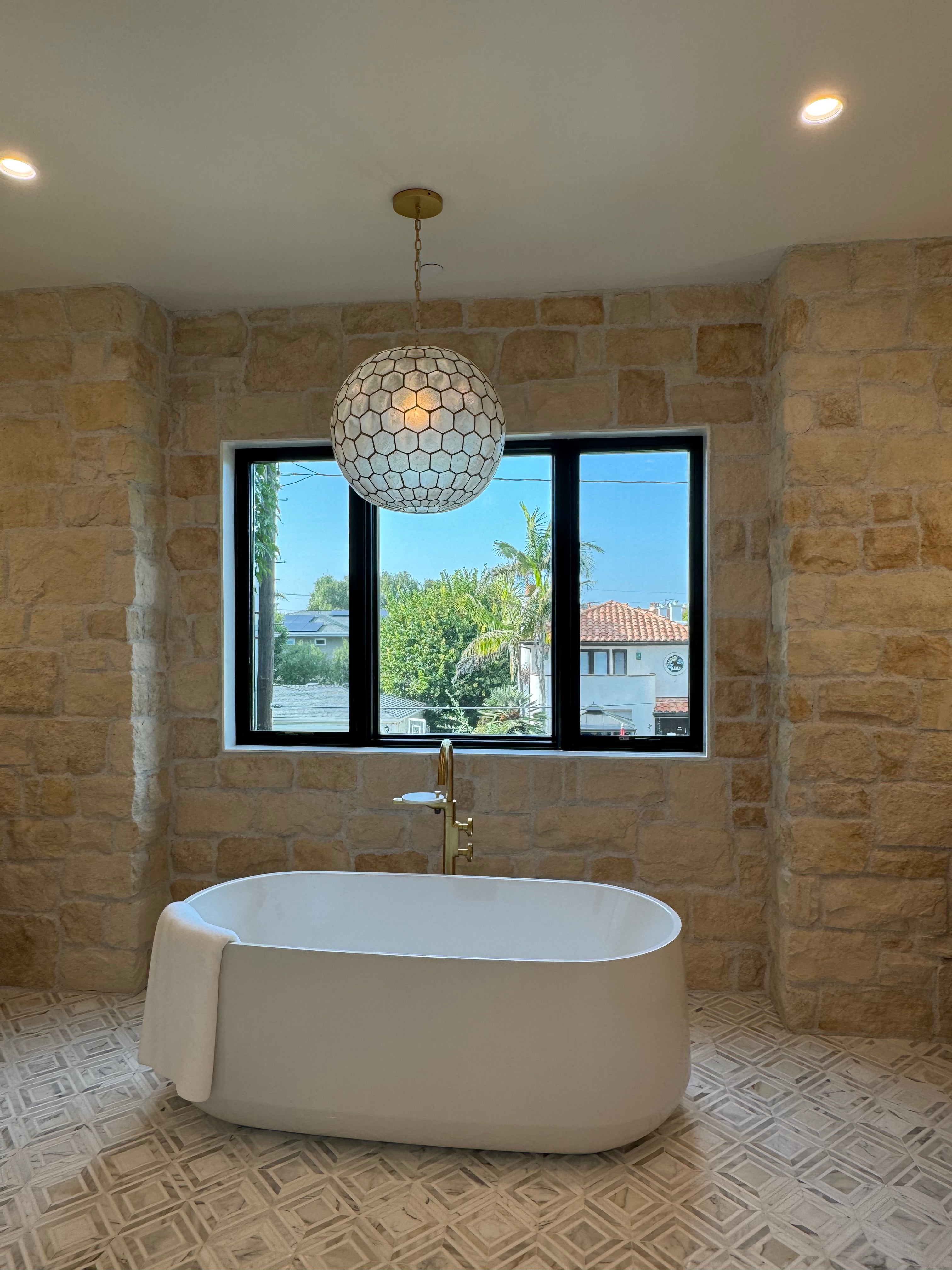
Bathrooms demand a different approach to material design. Every element — from vanities and wall surfaces to stone, fixtures, and lighting — is customized with moisture, scale, and daily routines in mind. Materials are selected and refined not only for appearance, but for how they perform over time, creating bathroom spaces that feel calm, durable, and thoughtfully composed.

Custom Bathroom Vanity
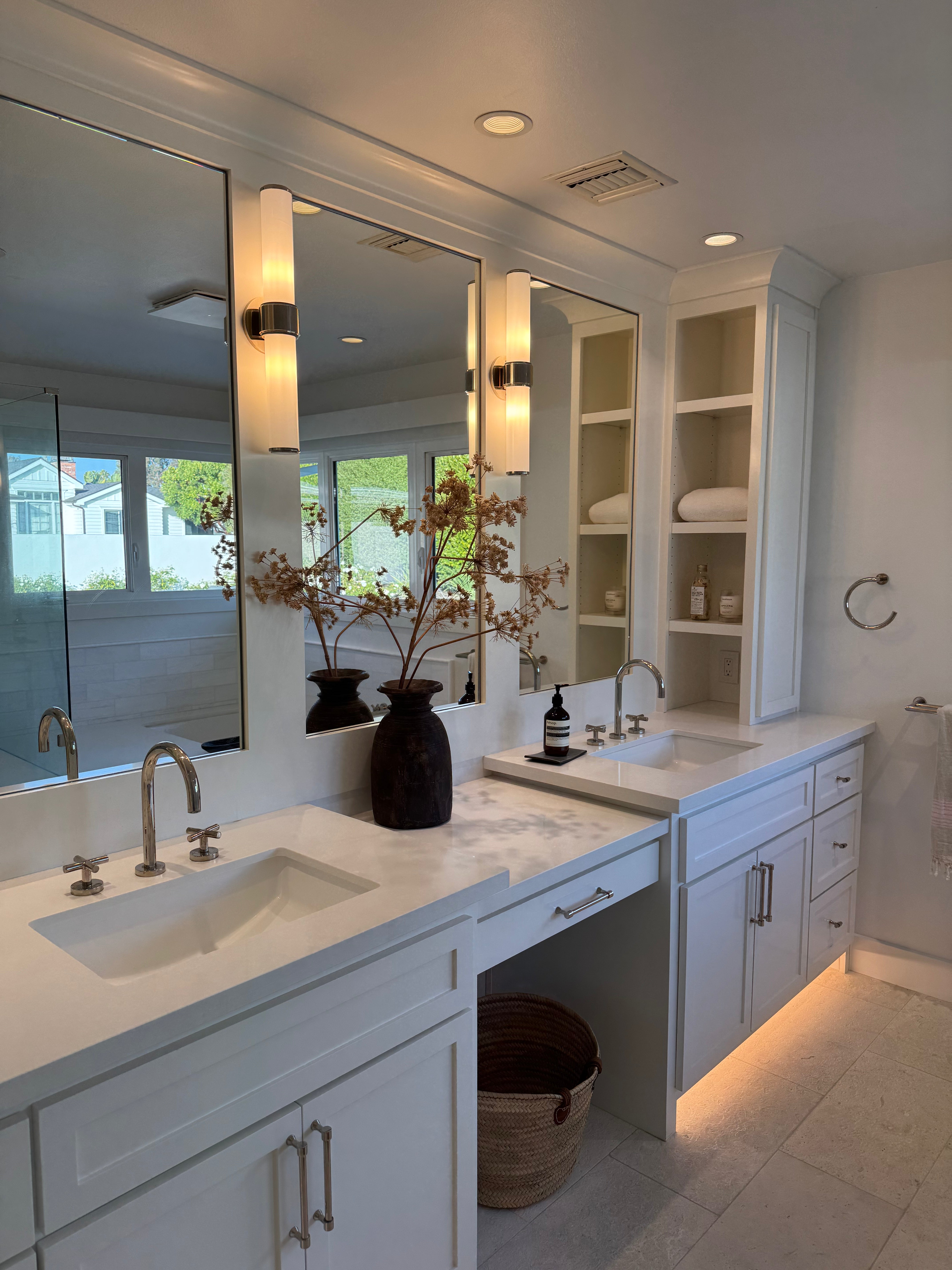
This custom bathroom vanity is designed as an integrated element within the space. From cabinetry proportions and storage layout to countertop detailing and fixture placement, every decision is tailored to enhance comfort, durability, and visual balance. The result is a vanity that feels intentional, elegant, and suited to everyday use.
Customization may include vanity width and height, drawer configuration, material finishes, countertop profile, hardware selection, and integrated lighting.

Shower Room
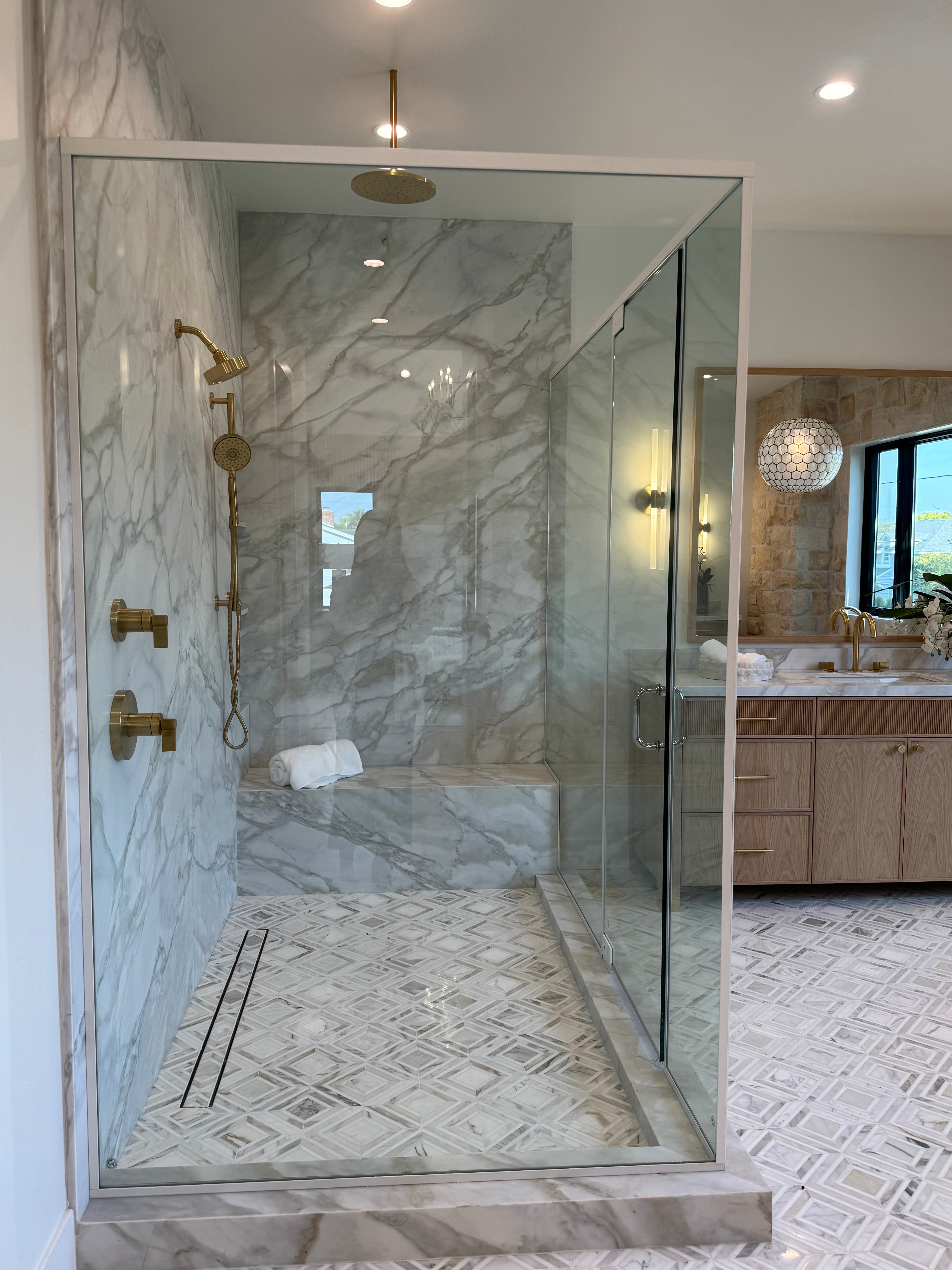
The shower is approached as a fully coordinated material system. Wall and floor surfaces, stone detailing, glass enclosure, and hardware finishes are selected and configured to create visual continuity while supporting moisture durability.
Material customization may include tile or slab selection, panel sizing, surface finish (matte, honed, polished), layout composition, and transitions between floor and wall surfaces. Glass enclosure dimensions, thickness, and configuration — frameless or semi-frameless — are specified to align with the overall material palette of the space.
Hardware elements such as hinges, handles, brackets, and finish tones are carefully coordinated with faucets, lighting, and cabinetry details to ensure a consistent material language throughout the bathroom.
Customization may include glass sizing, door swing configuration, hardware finish selection, slab integration, bench dimensions, and niche material alignment.

Bathroom Lighting
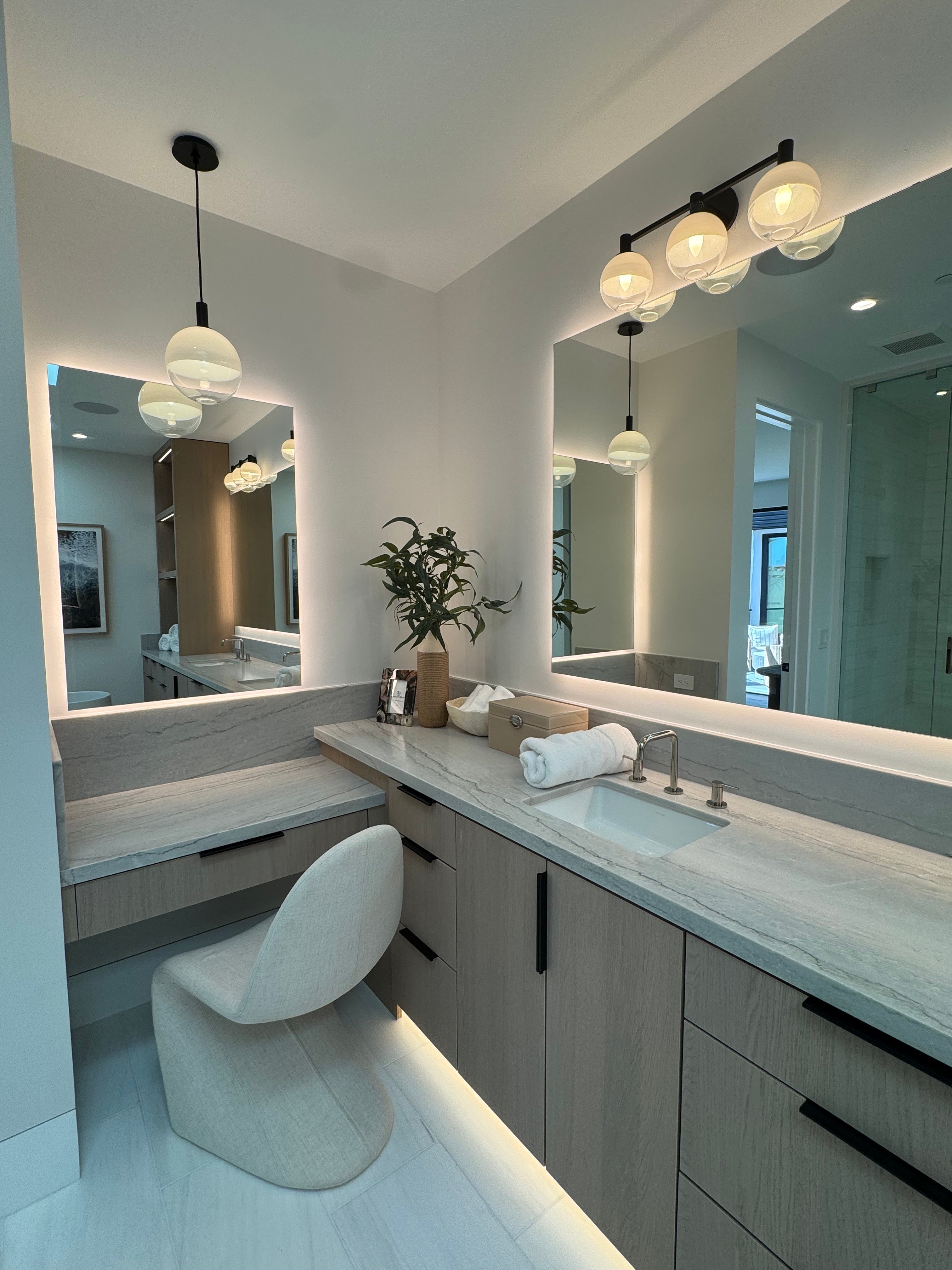
Bathroom lighting is designed to provide even facial illumination, minimize shadows, and complement surrounding materials. Mirror lighting, recessed ceiling fixtures, and accent details are positioned based on vanity width, ceiling height, and wall composition to ensure balanced light distribution.
Fixture selection, finish coordination, and color temperature are carefully specified to align with stone surfaces, cabinetry tones, and hardware finishes. In wet areas, moisture-rated fixtures and concealed integrations are considered to maintain durability without disrupting the visual simplicity of the space.
Design considerations may include vertical mirror lighting placement, integrated LED mirrors, IP-rated fixtures for wet zones, decorative pendants where appropriate, dimming systems, and coordination with wall materials and ceiling transitions. Fixture forms, materials, and finishes can be specified or customized to align with the overall bathroom design intent.
Lighting fixtures may be selected from curated collections or custom-developed based on reference imagery, with flexibility in form, material, finish, and color to support the overall material palette of the space.

Tile & Surface Materials
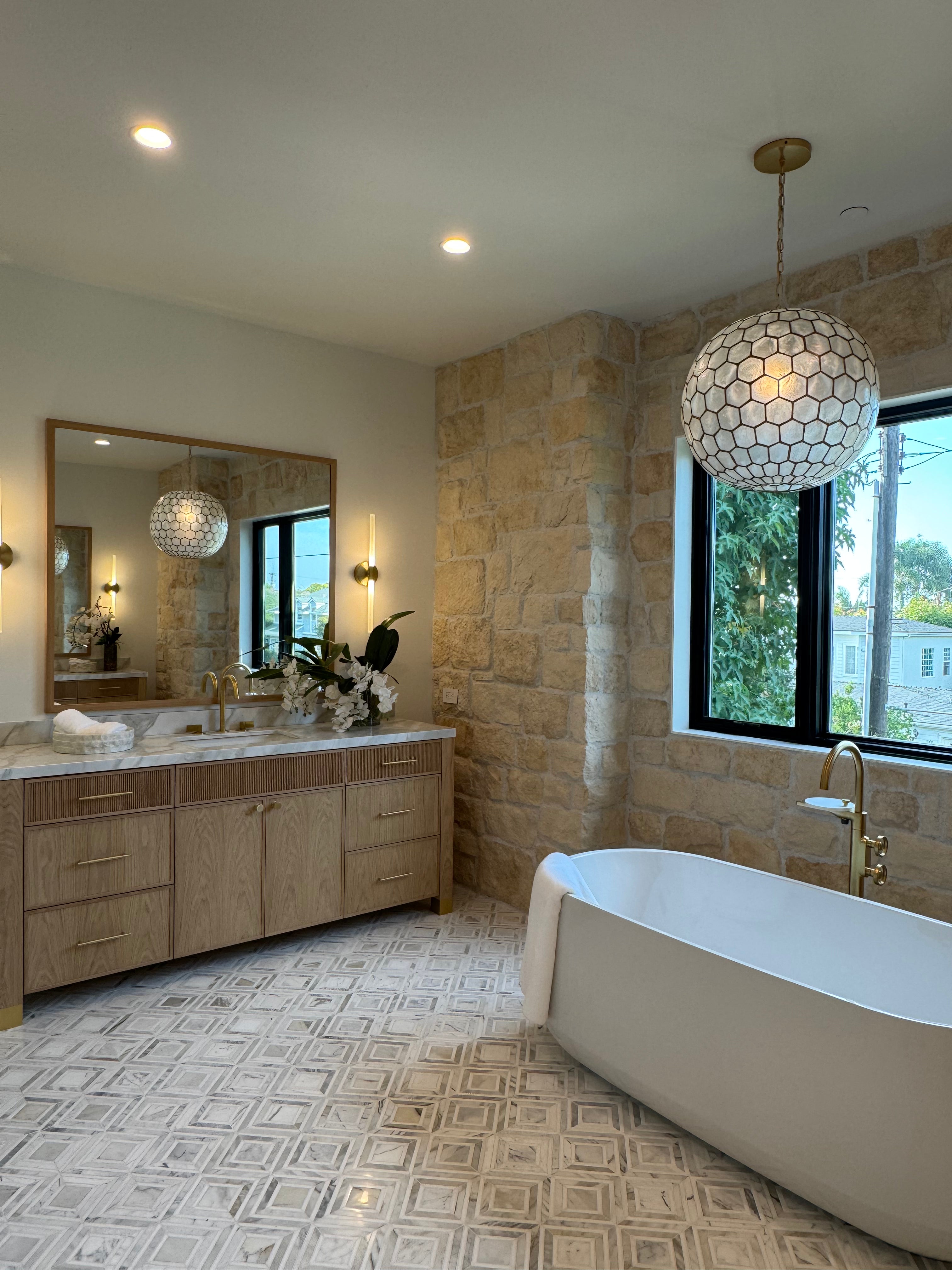
Tile and stone surfaces are selected to define texture, tone, and visual depth within the bathroom. Options may include natural stone, porcelain, mosaic, large-format slabs, and specialty finishes, each chosen based on aesthetic direction and performance requirements.
Material customization may involve tile size selection, finish type (matte, honed, polished), color variation, edge detailing, and layout composition. Rather than limiting choices to standard patterns, surfaces can be configured to create subtle texture, feature walls, or seamless stone applications tailored to the overall design intent.
Customization may include custom-cut stone panels, slab integration, pattern variation, grout color coordination, and material transitions between floor and wall surfaces.
Custom Bathroom Materials: What to Know
How do you design materials differently for wet and dry areas?
How do you design materials differently for wet and dry areas?
Materials are selected and detailed based on moisture exposure. Vanities and dry zones prioritize comfort and storage, while shower and wet areas focus on water control, durability, and proper transitions between surfaces.
What is the custom design process for bathroom materials?
What is the custom design process for bathroom materials?
The process typically includes evaluating the space and usage, defining material performance requirements, developing coordinated layouts and details, and finalizing specifications that align with both design intent and long-term durability.
Do you collaborate with designers on bathroom material specifications?
Do you collaborate with designers on bathroom material specifications?
Yes. We work closely with designers to review material options, detailing strategies, and technical considerations, supporting design intent from concept through execution.